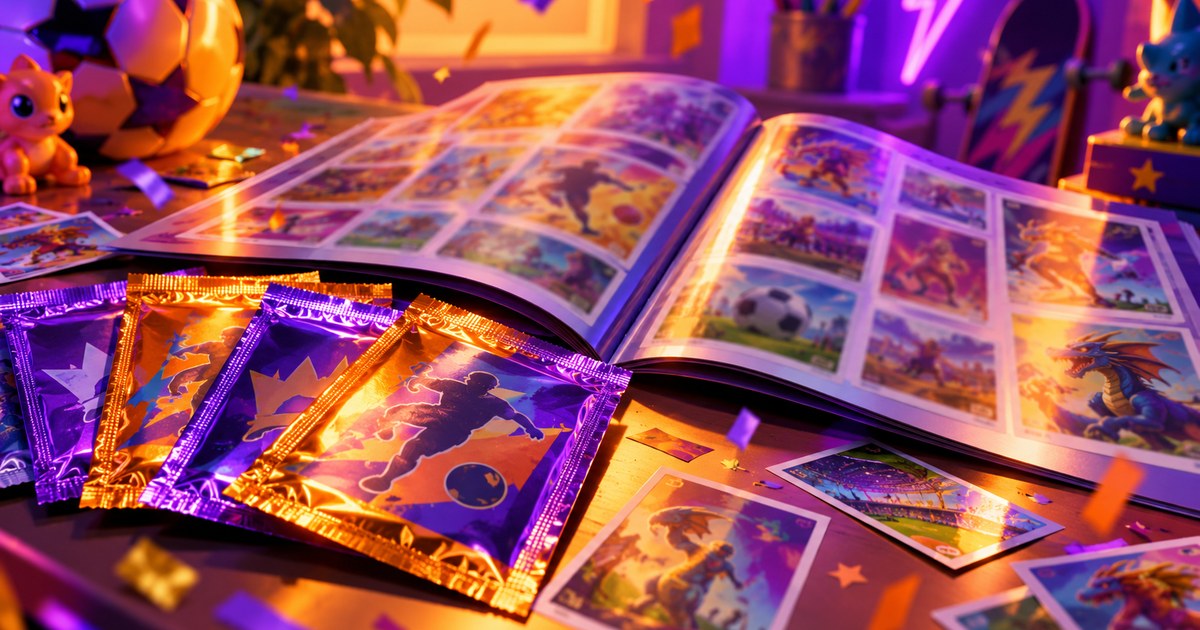
When a friend tells you there are Italian brainrot trading cards in actual shops, it sounds like the setup to a joke. A trend that started as AI-generated videos of a shark in trainers, printed on cardboard, sold in foil packets, next to the football stickers. It is true, and it is one of the clearest signs of how far this thing has travelled from TikTok.
Italian brainrot trading cards and stickers are a real, official product, not a rumour. In 2025, Panini, the company behind decades of football sticker albums, released an Italian-brainrot-themed sticker album, a launch confirmed on Wikipedia’s Italian brainrot page, and it works like any Panini collection: sealed packets, a printed album, duplicates for trading.
Trade coverage has described the wider collection as a two-market setup: in Italy, Panini itself publishes the stickers and an accompanying magazine, while across the rest of Europe, Panini acts as the distribution partner for a related trading-card line rather than the publisher of it. Either way, the mechanics on the ground are the same: you buy sealed packets, stick the numbered stickers into a printed album (or collect the cards, depending on your market), and trade your duplicates with friends.
Why Panini is the company that did this
Panini has been doing exactly this since the 1960s. Football tournaments, TV shows, films, anything with a cast big enough to fill an album. The business is simple and it has barely changed: print a book with numbered empty slots, print the stickers separately, sell them in sealed packets so nobody can pick and choose, and let the playground economy handle the rest.
Italian brainrot fits that model almost suspiciously well. The trend is built on a large cast of visually distinct characters, which is the one thing a sticker album actually needs. It has a strong colour palette. It is enormously popular with the exact age group that fills albums. And the characters are already sorted in fans’ heads into tiers of famous, which gives the “rare” stickers something to mean.
There is a neat coincidence in it too. Panini is an Italian company, from Modena. A pseudo-Italian meme trend ending up in an Italian sticker album is the sort of loop that sounds invented and is not.
What the Italian brainrot trading cards collection actually contains
Sticker albums are organised in sections, and this one follows the usual pattern: characters get pages, with a mix of standard stickers and harder-to-find special finishes like foil, glitter or holographic cards.
Neither Wikipedia nor Panini’s own published comments name the exact character checklist, so this piece will not invent one. What is safe to say: an album built around a trend this size only makes sense if it leans on the characters that got big first, the same logic behind every Panini collection Panini has ever printed. The exact checklist varies by region and print run in any case, so the version on a shelf in one country will not necessarily match another. If you want to know who the trend’s biggest names actually are, independent of what any specific album includes, the full cast list with creators and dates attached is in the Italian brainrot characters roster.
Two of the characters most likely to headline any Italian-brainrot merchandise, official or fan-made, are worth reading up on regardless of which album you end up with. Bombardiro Crocodilo is the crocodile-aeroplane hybrid that became one of the trend’s defining images, and Chimpanzini Bananini is the monkey-in-a-banana that The Guardian singled out as the character that carried the trend into mainstream press coverage.
How sticker-album collecting actually works
If you have never done one, the mechanics are worth knowing before you spend anything, because the maths is genuinely against you at the end.
You start fast. The first few packets are almost all new, the album fills quickly, and it feels like you will finish in a fortnight. Then it slows down hard. Once you have most of the album, nearly every packet is duplicates, and the last handful of slots can take far more packets than the first hundred did. This is not the company being unfair, it is just how random draws work when you already hold most of the set.
Which is why trading is the actual game, not an optional extra. Duplicates are currency. Two swaps with friends at school will do more for a nearly-complete album than another five packets will. The kids who finish albums are the ones who keep their swaps organised in number order and know exactly which numbers they are missing.
Some collections also let you order specific missing numbers directly from the publisher near the end of a campaign, which is worth checking on the album’s own printed instructions before anyone spends a fortune chasing a single sticker.
Sensible rules for trading
A few things that keep this fun rather than stressful, and they apply to any card or sticker craze.
Trade one for one by default. “Rarity” in a playground is mostly decided by whoever talks loudest, and a shiny sticker is worth exactly what two people agree it is worth on the day. There is no price guide that matters and no official value for any of these.
Buy from normal shops. Sealed packets from a supermarket or newsagent are the product working as intended. Resealed packets, loose “rare” singles from strangers, and anything that sounds like a shortcut to a complete album are how people lose money.
Keep your swaps in a box, not a pocket. Bent corners end more trades than anything else.
And keep it proportionate. A sticker album is a few pounds of fun at a time. If completing it stops being fun and starts feeling like homework with a budget, the album has done its job and you can stop.
This is official merchandise, not a fan project
Worth being clear about, because the trend has a lot of unofficial everything. The Panini line is a real, official product made by a printing company that has been in this business for sixty years, released in 2025. It has nothing to do with Rotino, we do not sell cards, and there is no app that ships you stickers.
It also sits inside a wider pattern. As of September 2026, the trend has spread well past video into games, merchandise and other crossovers, which Wikipedia’s article on Italian brainrot tracks. Sticker albums are simply the most traditional-feeling stop on that journey, which is what makes them funny. The other big beats of that spread, the games, the crossovers and the moments that broke out of the meme bubble, are rounded up in the biggest Italian brainrot memes and moments of 2026 so far.
If you like the cards, make your own character
The real appeal of a sticker album is not the cardboard. It is the roster: a set of characters with names, a pecking order, and a few you like more than the rest. That instinct to collect and rank is the same instinct that made people start inventing their own characters in the first place.
Rotino is a free iPhone app that takes any two things you type and merges them into a finished Italian brainrot character in seconds. Make the one that is missing from the album, give it a name, and share it.