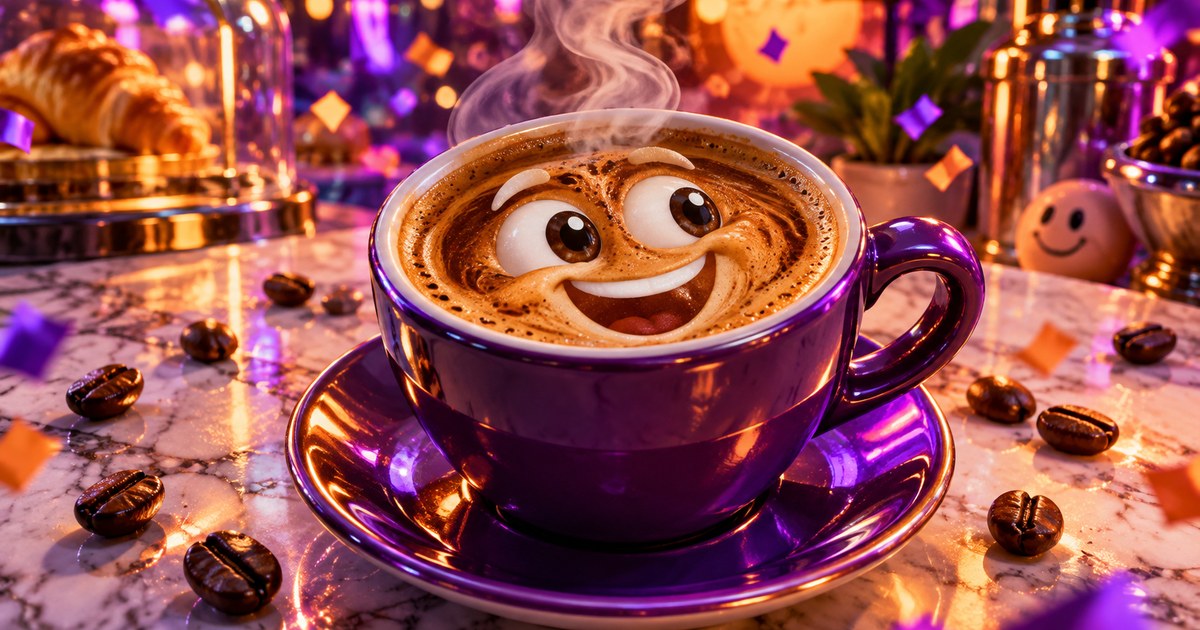
Espressona Signora is Ballerina Cappuccina’s sister: Wikipedia’s Italian brainrot page names her directly as the ballerina’s sibling, and she is drawn as an elegant woman with an espresso cup for a head. Most Italian brainrot characters arrive alone, get a name, and then wait for the internet to invent a family for them, so she is one of the rarer ones who arrived already attached to somebody. That built-in relationship is why she spread quickly, and it is also why so many explainer videos get her muddled up with the character she is paired with.
Espressona Signora is an AI-generated Italian brainrot character documented as Ballerina Cappuccina’s sister. She is drawn as an elegant woman with an espresso cup in place of a head, styled around dark coffee tones rather than milky ones, and her palette later crossed over into a real beauty trend.
Who Espressona Signora actually is
The short version: she is a spin-off built around an existing hit. Ballerina Cappuccina landed in March 2025 and became one of the trend’s biggest characters almost immediately, with a cappuccino cup for a head and a ballet dress. Espressona Signora is her dark-roast counterpart, built around the same idea with the opposite colour palette.
Here is where honesty matters more than a clean story: fan wikis disagree on exactly who made Espressona Signora and exactly when. Some credit the same TikTok account behind Ballerina Cappuccina; others attribute her to a different account entirely, and the dates on offer range across several months of 2025. None of that is confirmed by a named, authoritative source, so this piece is not going to pick a winner. What is confirmed, directly from Wikipedia, is the one fact that actually matters for understanding her: she exists in the trend’s shared mythology specifically as Ballerina Cappuccina’s sister.
The rest of what you will read on fan wikis is community fiction. There is no rulebook, no owner deciding what is true, and no version of the story that outranks any other. Different wikis contradict each other about who is related to whom, who made whom, and when, and quietly rewrite entries whenever a popular new video appears. Treat it the way you would treat playground rules: real to the people playing, fun, and completely unenforceable.
What her name means in Italian
This is the part that actually rewards knowing a bit of Italian, and it is the same trick running through the entire roster.
Espresso is a real Italian word, and in Italy it is simply what coffee means by default. Short, dark, no milk.
-ona is where the joke lives. Italian has an augmentative suffix, -one, that makes a thing bigger or more emphatic, and -ona is its feminine form. So “Espressona” reads as something like a big, grand, larger-than-life espresso. It is the exact mirror image of what happens in “Cappuccina”, where a diminutive-shaped ending makes the cappuccino small and cute. One sister is scaled up, the other is scaled down, and the grammar does the whole gag before you have even seen the picture.
Signora is completely ordinary Italian for lady or madam. It is what you would call a grown woman politely.
Put together, the name lands as something close to “Madam Big Espresso”, which is funnier in Italian than it is in English because the construction is grammatically correct and the meaning is absurd. That gap between correct grammar and ridiculous sense is the engine of the whole trend, and it is broken down properly in Italian brainrot names and what they actually mean.
The design: espresso, not cappuccino
The visual contrast is doing as much work as the name. Ballerina Cappuccina is pale and frothy, built around milk foam colours and a dancer’s silhouette. Espressona Signora is the dark-roast version: deep brown, glossier, styled less like a dancer and more like someone dressed for an evening out.
That is a genuinely smart piece of character design, whether or not it was planned that way. Two characters made from the same material, differentiated purely by colour temperature and posture, so you can tell them apart in a thumbnail at speed. Thumbnail legibility is most of what makes a brainrot character spread, because almost nobody is watching these at full attention.
If you want to see where both of them sit against everyone else, creator and date attached, the full list is in the Italian brainrot characters roster.
The makeup trend she accidentally started
Here is the genuinely unexpected part, and the bit most character explainers skip entirely.
The coffee-shop colour palette jumped off TikTok and into beauty content. Bustle covered how the Ballerina Cappuccina and Espressona Signora look (Bustle’s own copy calls her “Espresso Signora”, a shorter version of the same name) inspired makeup trends built on the same two ideas: creamy cappuccino tones on one side, rich espresso browns on the other. Brown-toned makeup was already having a moment, and a pair of viral coffee-headed cartoon women gave people a ready-made reference image to point at.
It is a good illustration of how far this trend travels from its own medium. A joke character generated in an AI video tool ends up as a shade reference in beauty tutorials, which is not a journey most memes make. The same character set has also turned up in licensed merchandise and games, as documented on Wikipedia’s Italian brainrot page.
Why she gets confused with her sister
Three reasons, and they are all fixable in about ten seconds.
First, the names rhyme structurally, both ending in a feminine Italian vowel with a coffee word bolted to the front. Second, the two designs share the same visual formula (a beverage-cup head, a woman’s body, one strong colour swap), so the art style reads as near-identical at a glance. Third, compilation videos routinely show them back to back without labelling either one.
The reliable tell is the colour. Foam-pale and ballet-shaped is Ballerina Cappuccina. Dark, glossy and dressed up is Espressona Signora. The full background on the first one, including which parts of her widely repeated backstory are documented and which are invented, is in Ballerina Cappuccina and Cappuccino Assassino, explained.
The bigger pattern she fits into
Espressona Signora is a good case study in how the trend actually grows. A character lands, gets big, and the fastest route to a second hit is to build something adjacent to it: same style, same voice treatment, one strong visual difference. That is not cynical, it is just how a shared format works when thousands of people are building in it at once. The character that set the template for all of this, shoes and all, is covered in Tralalero Tralala explained.
The honest summary: one documented character, a sibling link that came from the trend’s own record rather than a fan theory, a name that is a perfect grammatical joke, and a surprise second life in beauty content. The exact creator and creation date are still disputed across fan wikis, and everything past the documented facts above is fan fiction. Knowing the difference does not spoil any of it.
Once you have spotted how the naming and the colour-swap trick work, building your own is the fun part. Rotino is a free iPhone app that takes any two things you type and merges them into a finished Italian brainrot character in seconds, ready to save and share.