People ask whether Italian brainrot is AI the way they ask whether a magic trick is fake: half hoping the answer is no. The honest answer is yes, mostly. But “it’s AI” hides the more interesting part, which is how much of every famous character was decided by a person before any AI tool got involved.
Yes, Italian brainrot is AI-made. Wikipedia describes the trend as absurd images and videos created with generative AI, usually animal-object hybrids with Italian-sounding names, narrated by an AI-generated Italian voice. The pictures and the voice are machine-made; the names, the jokes, the lore and the remixing that made characters famous came from people.
The parts of Italian brainrot that are AI
There are two machine-made layers in a classic Italian brainrot video.
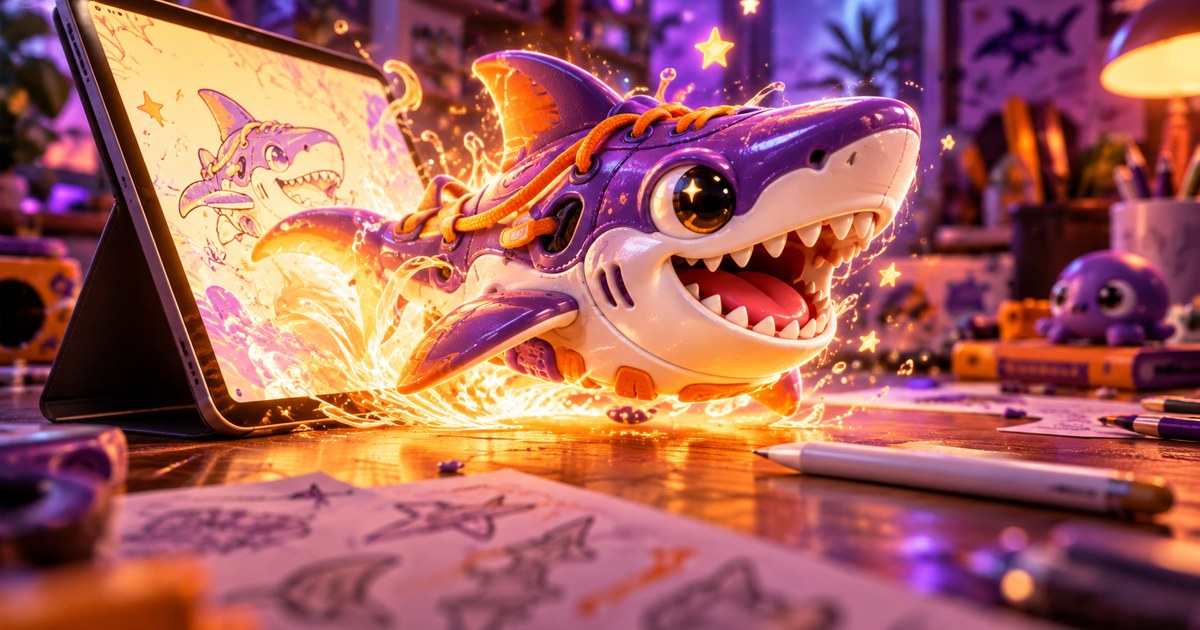
The image. The characters are generated pictures: a shark in sneakers, a crocodile fused with a bomber plane, a ballerina with a cappuccino cup for a head. Wikipedia’s article on the trend says the format typically features hybrid figures that combine animals with everyday objects, foods and weapons, created with generative AI. That glossy, slightly-too-smooth look you recognise is the fingerprint of an image generator.
The voice. The dramatic narrator reading out the character’s name is not an Italian actor. Know Your Meme describes the videos as using a male Italian text-to-speech AI voice, and Wikipedia calls it AI-generated narration in Italian that is often nonsensical. The deadpan, over-serious delivery is a big part of the joke, and it is exactly what a synthetic voice does well.
For most characters, no source names a specific tool, because creators used whatever image generators and voice apps they had. There is no single official “brainrot machine”. One well-documented exception shows how it works: Wikipedia records that Indonesian creator Noxa made Tung Tung Tung Sahur in DALL-E, asking it to draw a “pentungan sahur” (the wooden beater used for the sahur wake-up call) with a face and legs, trying several follow-up prompts, and uploading the image he liked best.
The parts that are human
This is the bit generator landing pages skip, and it is the reason some characters became famous while millions of other AI images vanished.
The idea. Someone decided that a shark should wear sneakers, and Noxa chose which of his DALL-E results was the keeper. An image generator will draw whatever you ask for; it does not decide what is funny. The pairing of two things that do not belong together is a creative choice, and it is the whole formula. Our guide on how to make an Italian brainrot character breaks that choice down step by step.
The name. Names like Tralalero Tralala and Ballerina Cappuccina are the hook. They rhyme, they repeat, and they borrow Italian-style endings like -ini and -ello, which Wikipedia notes are typical of the trend. A good name is what makes a character chantable on a playground. That is wordplay, and it is human.
The lore. Fans invented marriages, rivalries, sisters and backstories, and kept extending them. Wikipedia describes this as a kind of internet folklore. No AI decided that Ballerina Cappuccina is married to a ninja called Cappuccino Assassino; people wrote that story and others kept adding to it.
The remixing. The trend spread because people reused each other’s audio, redrew characters, put them in quizzes, games and stickers. As the timeline of how Italian brainrot started shows, the very first famous character passed through several different creators’ hands before it took the shape everyone knows.
So the fairest description is that Italian brainrot is AI-generated art directed by people. The machine did the drawing and the reading aloud. People did the joke.
Why “AI slop” is part of the joke
There is a reason the trend got the name brainrot. “AI slop” is the term for low-effort, mass-produced AI content that clogs up feeds, and Wikipedia’s AI slop article covers how much of it now floods social platforms. Italian brainrot leans right into the slop look. The images are a bit wonky, the voices are flat, the stories make no sense.
Wikipedia’s Italian brainrot article notes that people often use the brainrot label to acknowledge how ridiculous the trend is while recognising how much AI slop is out there. In other words, a lot of fans are in on it. The characters are funny partly because they are such an obvious product of the AI era.
Where the AI question gets serious
Not everyone finds it funny, and the criticism is worth knowing about.
When Tung Tung Tung Sahur and Ballerina Cappuccina were added to Fortnite as paid skins in April 2026, a large part of the reaction was about AI. Wikipedia records that the skins were criticised before release for including characters based on AI-generated media, and that Ballerina Cappuccina became the lowest-rated skin in the game. TheGamer reported players asking Epic for an option to hide them. The full story is in our explainer on the Italian brainrot Fortnite skins.
The other big AI question is ownership. If an image was generated by a tool, who owns the character? Wikipedia describes an ongoing lawsuit between the agency representing Tung Tung Tung Sahur’s creator and the studio behind Steal a Brainrot over who owns the character, and as of October 2026 there is no final answer. We lay out both sides in who owns Italian brainrot.
How to make your own with AI, responsibly
If you want to make an Italian brainrot character, an AI tool is the natural way to do it; that is how the originals were made. A few habits keep it fun and fair:
- Make something new. Combine your own two things rather than regenerating someone else’s famous character and passing it off as yours.
- Name it yourself. The name is the human part and the best part. Try a real Italian ending and a little repetition.
- Keep it kind. Some early brainrot audio contained swearing and offensive lines, as Wikipedia’s Italian brainrot article documents, which is why so many parents got worried. You do not need any of that for a character to be funny.
- Use official apps. Get tools from the App Store or Google Play, not from download sites promising free premium features.
- Add a voice if you want one. Our guide to making an Italian brainrot voice covers the narration side with legitimate text-to-speech.
Making one is also the quickest way to understand the AI question for yourself. You will notice straight away that the tool happily draws anything, and that you are the one deciding what is actually funny.
Rotino works exactly that way. You choose the two things, dog and donut, fridge and camel, anything at all, and its AI merges them into an original Italian brainrot cartoon character with a name to match. The idea is yours; the app does the drawing.